

Uncovering the AI Porn Celeb Scandal: What You Need to Know
Have you wondered how a realistic video can show a famous face in a private scene and still be completely fake? This issue, often called ai porn celeb, refers to sexual content that looks like real public figures or convincing doubles, made without consent.
The spread of synthetic explicit media has made it harder for people to tell what is real. This piece explains what happened, how these clips are made and shared, and why they cause real harm — from ruined reputations to harassment and emotional distress.
We will summarize a major case from Japan and show why it matters to U.S. readers who might assume this is only a local problem. You’ll also read about a well-known creator, QTCinderella, and a public warning from Paris Hilton to illustrate the human toll.
Key Takeaways
- “AI-generated” explicit media can mimic real people and spread quickly online.
- These fakes inflict reputational, legal, and emotional damage despite being fabricated.
- The Japan case shows how local incidents can have global impact.
- Creators and public figures like QTCinderella and Paris Hilton highlight the personal cost.
- Lawmakers are racing to update laws as technology turns identity into a weapon.
What happened in the latest ai porn celeb case
A recent arrest in Japan highlights how quickly likeness-based abuse can be packaged and monetized online.
The suspect, named Tetsuro Chiba, was detained after police say he sold obscene, celebrity-lookalike images created with generative technology. Authorities say the operation ran between December 2024 and May 2025.
Police reported Chiba made 14 obscene image files publicly available at set prices during that period. Investigators told Kyodo News he produced more than 520,000 images of about 300 public figures and earned roughly 11 million yen.
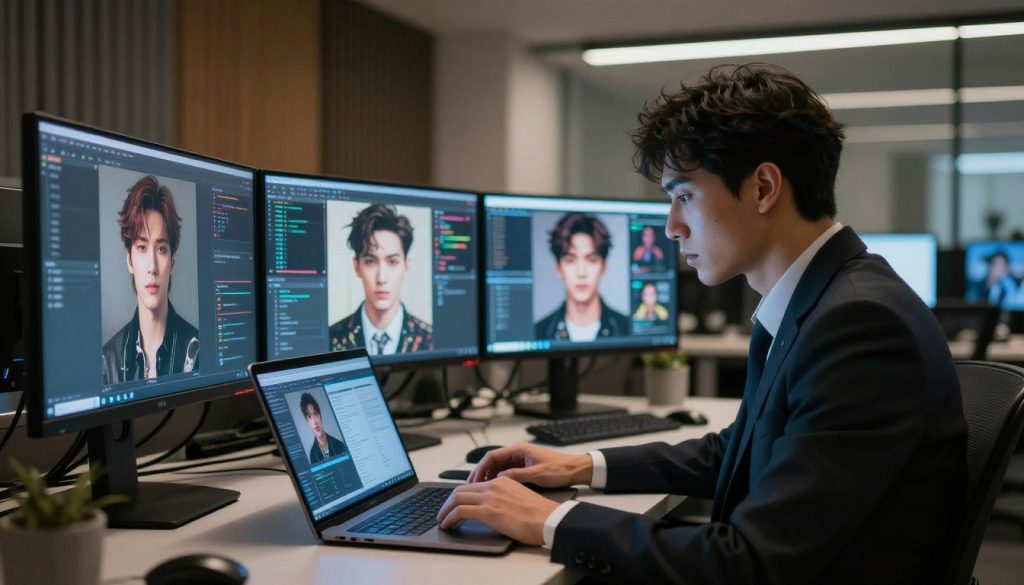
Scale, marketing, and monetization
Reports say the content was promoted on social platforms to drive traffic to paid pages. Buyers could purchase pre-made sets at fixed rates.
Custom requests commanded higher fees, meaning customers could ask for specific targets. That on-demand model turned likeness manipulation into a revenue stream.
Why this matters globally
The case draws attention because the tools and methods are widely available. When one operator can scale to hundreds of thousands of images, similar schemes can appear anywhere.
Police and regulators are watching closely because this misuse of modern technology can harm many people and cross borders fast.
- Who: Tetsuro Chiba, arrested on allegations of selling fabricated obscene images.
- When: Dec 2024–May 2025; 14 files offered at set prices.
- Scale: Reported 520,000+ images covering ~300 celebrities.
- Distribution: Social promotion and paid custom requests.
| Detail | Reported Figure | Significance |
|---|---|---|
| Public files offered | 14 files | Concrete pricing and availability during the timeframe |
| Total images produced | 520,000+ | Shows high-volume, automated production |
| Individuals targeted | ~300 | Wide reach across many public figures |
| Revenue reported | ~11 million yen | Monetary motive confirmed by reports |
| Promotion channel | Social media | Made scaling and customer outreach easier |
To understand why this keeps happening, the next section explains how those likenesses are made and why it is so easy to target people.
How AI porn technology turns real people into fake porn
A single online photo can be repurposed to create a fake explicit clip that looks disturbingly real.
Deepfakes explained in plain English
Deepfakes learn patterns from real photos, videos, and audio. Then they map a person’s face onto someone else in a scene. The result can be a convincing likeness that the person never recorded.
How the pipeline usually works
Creators source public photos, generate synthetic content, and package it for sharing or sale. That cycle makes misuse quick and scalable.
Real examples and rapid spread
When a streamer like QTCinderella finds her face used in fake material, discovery often triggers reposts, memes, and long-lived copies. That viral trail keeps harm alive.
Who gets targeted and why women face more harm
Anyone with photos online can be targeted. Women are often hit harder because sexualized abuse online is used to shame or silence them.
Distribution and monetization
- Niche sites and closed groups
- Social teasers and paywalled requests
- Custom orders that create repeat income
| Stage | What happens | Impact |
|---|---|---|
| Sourcing | Public photos and videos collected | Wide pool of potential targets |
| Generation | Face mapping creates fake clips | Realistic but fabricated material |
| Distribution | Shared on platforms and pay sites | Rapid spread and lasting footprint |
Why it matters in the United States: women, celebrity images, and the law
In the United States, image misuse has moved from niche harassment to a nationwide safety and legal concern.

Paris Hilton’s warning: long-term damage and repeated victimization
“There are over 100,000 explicit deepfake images of me; none are real or consensual, and each new one triggers fear and distress.”
Paris Hilton‘s experience shows how each repost or new file reopens harm and public shame.
Policy response: the DEFIANCE Act
The DEFIANCE Act aims to lower legal barriers so victims can sue creators of forged explicit material.
The bill passed the U.S. Senate unanimously and has bipartisan House support from Alexandria Ocasio-Cortez and Laurel Lee, signaling momentum for civil remedies.
Limits of enforcement and rising volume concerns
Enforcement faces real obstacles: anonymity, cross-border hosting, and fast-moving technology that outpaces takedowns.
Analyses show how quickly abuse spreads: one tool reportedly shared 1.8 million sexualized items in nine days, while another estimate reached nearly three million, including thousands depicting children.
Bottom line: celebrity cases bring attention, but the same tools harm non-famous women who often lack resources. Faster creation and sharing still outstrip law, enforcement, and victim support.
Conclusion
, Beyond shock value, these fabrications reveal a systemic market that preys on consent and reputation.
The Japan arrest showed alleged mass creation, social promotion, paid requests, and meaningful revenue — a pattern that made the abuse organized and profitable.
High-profile examples like QTCinderella illustrate that this harm spreads fast, but anyone with photos online can be targeted. Women often face greater shame and lasting damage.
Public warnings from Paris Hilton and the push behind the DEFIANCE Act aim to improve accountability and legal remedies in the United States.
Expect more cases, faster platform responses, and ongoing policy debates. Stay informed and skeptical: realism is no longer proof of authenticity.